Why Walking Is the Most Underrated Form of Exercise
In a wellness culture obsessed with intensity — the harder workout, the fancier equipment, the more punishing regimen — the most effective thing many people cou...

Community Author · July 31, 2026
In a wellness culture obsessed with intensity — the harder workout, the fancier equipment, the more punishing regimen — the most effective thing many people could do for their health is also the most ordinary. It requires no gym membership, no special gear, no app, and no talent. It is walking, and it is quietly one of the best forms of exercise there is. The reason it gets overlooked is precisely its simplicity: it feels too easy to count, too unremarkable to matter. But the evidence and the everyday experience both point the same way. Walking delivers an enormous amount of what we exercise for, and it does so with a fraction of the friction of everything else.
The exercise we dismiss because it is easy
There is a strange bias built into how we think about fitness. We tend to assume that benefit scales with difficulty — that if something does not leave you sweating, aching or gasping, it cannot be doing much. Walking fails that test on the surface, which is why so many people mentally file it under "not real exercise" and skip past it in search of something that feels like it counts. The very gentleness that makes walking accessible is what makes us underrate it.
That instinct is wrong, and it costs people a lot. The benefit of movement does not come only from maximum effort; a great deal of it comes from consistent, moderate activity accumulated over time. Walking happens to be almost perfectly designed to deliver exactly that kind of activity, because it is easy enough to do often and long enough to add up. The thing that makes it seem unimpressive — that anyone can do it, any time, without preparation — is the same thing that makes it work.
What walking actually does for the body
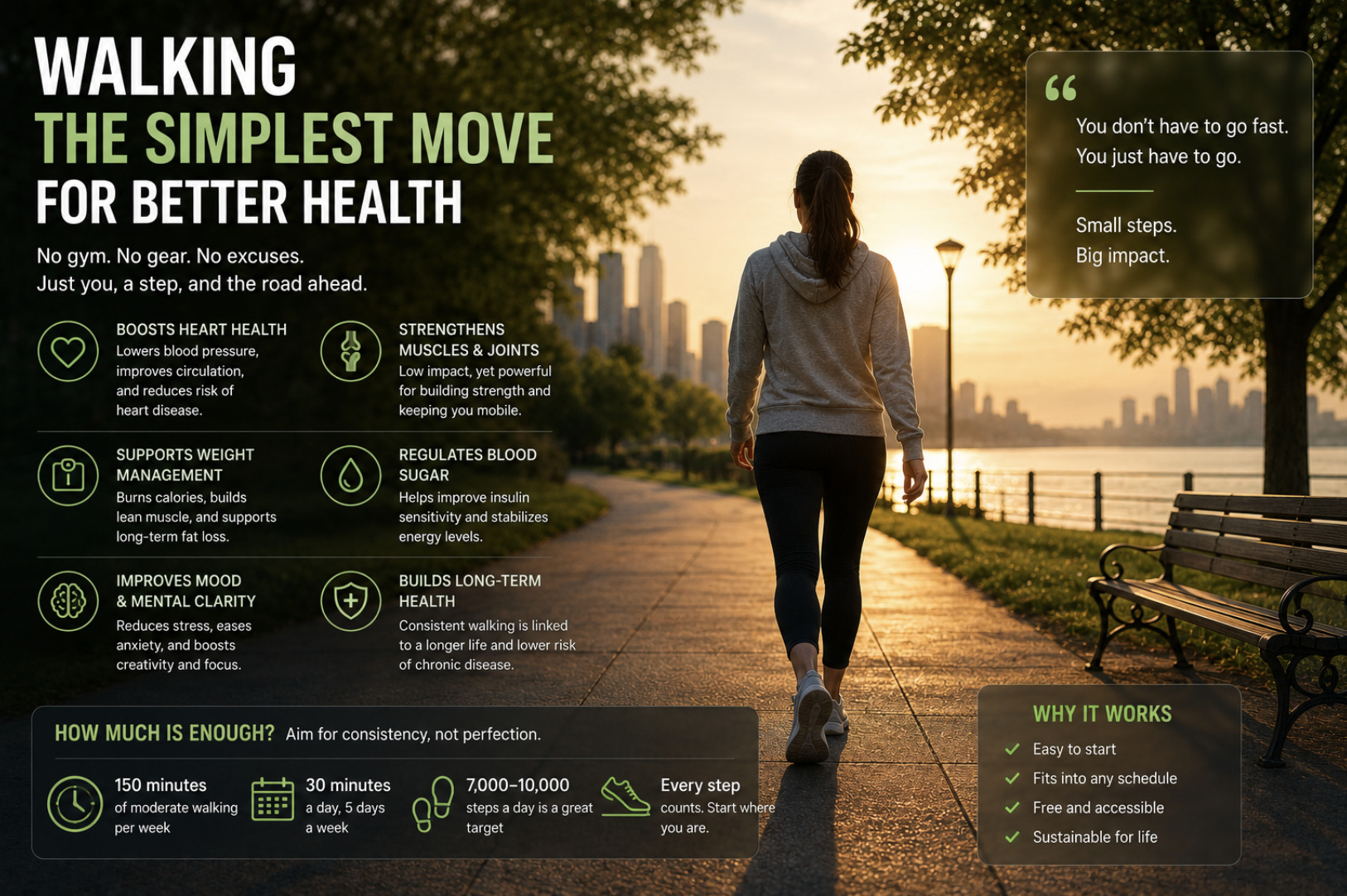
The physical case for walking is broad and genuinely strong. As a regular activity, it supports the heart and circulation, helps regulate weight and blood sugar, keeps joints mobile and muscles engaged, and contributes to the kind of steady, sustainable fitness that keeps a body functioning well over decades. It is gentle on the joints in a way that high-impact exercise is not, which means most people can do it consistently without the injuries and recovery days that derail more demanding routines.
That last point deserves emphasis, because consistency is where most exercise plans fail. The best form of movement is not the one that is theoretically most intense but the one you will actually keep doing, and walking wins decisively on that measure. It is low-risk, low-barrier, and easy to sustain for life, so the modest benefit of a single walk compounds across years of walks into something substantial. A gentle activity done reliably beats an intense one abandoned after a month, and walking is the gentle activity people are most likely to keep.
The mental side, which may matter most
If the physical benefits were all, walking would already earn its place. But its effect on the mind is where it becomes something close to essential. A walk, especially outdoors, is one of the simplest reliable ways to lift mood, ease stress, and clear a crowded head. There is something about the combination of gentle movement, a change of scene, and the rhythm of putting one foot in front of the other that settles the nervous system in a way sitting still does not.
Anyone who has gone for a walk while stuck on a problem and returned with the answer knows this first-hand: walking seems to loosen thinking, letting ideas connect that would not connect at a desk. It is a natural counterweight to the way modern life keeps us seated, indoors, and mentally clenched — a theme close to the quiet exhaustion we described in the quiet exhaustion nobody talks about. For mental health, walking is not a small thing dressed up as a big one. It is one of the most accessible tools we have, and it is free.
How to actually walk more
The beauty of walking as a goal is that it does not require a plan so much as a few small shifts, because the opportunities are already scattered through an ordinary day. The most effective approach is not to schedule grand hour-long treks but to weave more walking into what you already do: taking the stairs, getting off a stop early, parking further away, holding a conversation on the move instead of sitting, walking to somewhere you would normally drive. These fragments accumulate, and because they are attached to things you were doing anyway, they survive busy weeks that would flatten a formal exercise routine.
It also helps to make walking pleasant rather than a chore, since anything enjoyable is easier to sustain. Walking somewhere green, listening to something you like, or going with a friend so it doubles as time together all turn the activity from a task into something you look forward to — and that, more than discipline, is what keeps it going. The point is not to hit a punishing target but to move more, more often, in a way that fits your actual life. Walking asks almost nothing of you and gives back a remarkable amount. In a culture forever chasing the next intense, complicated, expensive path to health, the humble walk remains quietly, stubbornly, one of the best.
Frequently asked questions
Is walking really enough exercise? For most people, regular walking delivers a large share of what exercise is for — cardiovascular health, weight and blood-sugar regulation, joint mobility and mental wellbeing. Because it is easy to sustain consistently, its benefits compound over time. It may not replace strength training entirely, but as a foundation of movement it is genuinely enough to matter.
How much walking should I aim for? Rather than fixating on a single number, focus on walking more, more often, in ways that fit your day. Consistency matters more than hitting a precise target, so building small walks into your routine that you will actually keep doing beats an ambitious goal you abandon after a few weeks.
Why is walking good for mental health? A walk, especially outdoors, combines gentle movement, a change of scene and a steady rhythm that together ease stress, lift mood and clear the mind. Many people find it loosens their thinking and helps solve problems. It is one of the most accessible and free tools available for mental wellbeing.