
The Slow Disappearance of Boredom — and What We Quietly Lost When We Stopped Letting Ourselves Be Bored
There is a small experiment you can run on yourself, and the result of it will tell you more about the present moment than almost any other piece of self-observ...
Community Author · June 2, 2026
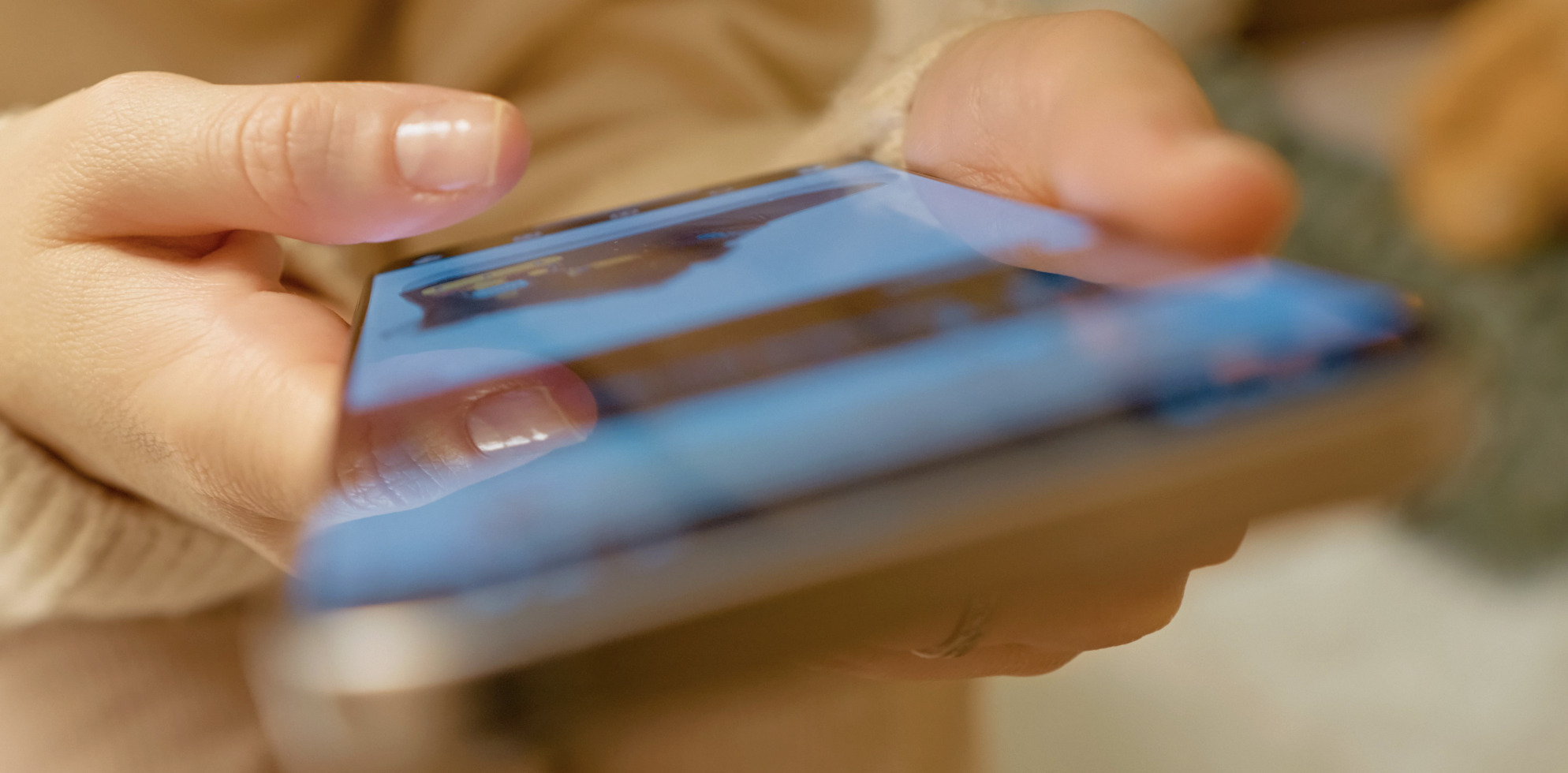
There is a small experiment you can run on yourself, and the result of it will tell you more about the present moment than almost any other piece of self-observation available to you. The next time you find yourself in any small, in-between situation — the lift between floors, the kettle that has another forty seconds to go, the queue at the coffee shop, the moment after you have sent the message and before you have decided what to do next — notice the reflex. Notice the speed at which your hand moves to your pocket, the speed at which the thumb finds the same three apps in the same order, the speed at which the small unoccupied space has been filled before you registered, consciously, that it had appeared.
That speed is new. It is, on the scale of human history, very new. As recently as 2010, the same situations existed, and in them the mind was permitted to do something most of us now find vaguely uncomfortable: nothing in particular. We have spent the fifteen years since then methodically eliminating that nothing, with extraordinary efficiency and almost no public conversation about what we were doing.
The thing we eliminated had a name. It was called boredom. And we have begun to notice, slowly and only in some moods, that we did not understand what it was for.
What boredom actually was
We use the word loosely, often as a complaint or as a synonym for unstimulated, and that imprecision has done us no favours. Boredom, in its older and more accurate sense, is not the absence of pleasure. It is the absence of assignment. It is the cognitive state of having no specific task that the mind has been told to perform, and the small, low-pressure unease that produces while the mind decides what to do with itself.
That state, it turns out, is a workshop. When the mind has no assignment, it does not idle. It wanders. It connects things that the working mind kept separate because their joining was not on any agenda. It rehearses, half-consciously, the conversations that did not go the way they should have. It retrieves memories that were waiting to be reconsidered. It tries on identities that the busy mind never has time to try on. It produces, occasionally, the small original sentence — the joke that will work tomorrow, the new approach to the problem that has been stuck for a week, the recognition that the relationship has been making one unhappy — that has been waiting for unstructured time to surface.
None of this is romanticism. It is, broadly, what the cognitive science of mind-wandering has been quietly confirming for the past two decades. The default-mode network of the brain — the set of regions that becomes more active when one is not focused on an external task — is implicated in self-referential thinking, in creative recombination, in the gentle housekeeping that maintains a coherent sense of self over time. Boredom is the door to that network. Unstructured idle time is the precondition for the work it does. The mind that is always assigned is also the mind that never gets to that workshop. The workshop is still there. The door has just been kept closed by something that fits in a pocket.
When did we kill it
The honest answer is that we did not kill it deliberately. We were not asked, in any moment that allowed us to choose, whether we would rather give up the in-between spaces in exchange for the immediate availability of every piece of media in human history. We made the trade in pieces, in increments of a few seconds at a time, across the years between 2010 and approximately 2017, and by the time we had completed it, the in-between spaces had become so reflexively filled that most of us no longer remember what was in them before.
The mechanism was attention as a market. The platforms that filled the in-between spaces did not invade them by force; they made themselves so easily available, and so rewarding in the immediate term, that the older default — looking at the wall, looking at one's hands, looking at the other people in the room — became the harder choice. The cost of staying in the unfilled moment rose, second by second, until it was higher than the cost of reaching for the phone. We did not lose to coercion. We lost to convenience.
That distinction matters because it tells us, with some precision, where the door back is. It is not in legislation, and it is not in a hardware change, and it is not in the next better app. It is in the small, repeated decision not to fill the seven seconds. It is in tolerating the low-grade discomfort of the unoccupied moment for long enough that the mind notices it has been given permission to wander.
What we are doing to children
The version of this story that most deserves attention, and gets the least, is the version unfolding among children. The generation currently moving through middle school and high school is the first one in human history to be raised inside an attentional environment in which boredom, in its older sense, was an option rather than a default. Their idle moments are filled — by their devices, by the devices around them, by the constant ambient assumption that any seven-second pause is an attentional emergency to be solved.
The research base on what this is doing to them is still emerging, and the honest thing to say is that we do not yet know all of it. What we do know is consistent enough to be worried about. Childhood "I'm bored" — the complaint that historically preceded the construction of the fort, the invented game, the first real moment of solitary reading, the wandering walk that produced the small project that became the early hobby — is becoming rarer. It is being replaced by the request for more content. The phrase itself, in its older form, is becoming the marker of a child who has had unusual freedom from the filled environment.
This is not a moral panic and the response is not to ban devices. The response, more usefully, is to recognise that the conditions under which children develop the capacity to entertain themselves — and through that, the capacity to identify what interests them, and through that, the capacity to know themselves — used to be ambient and now have to be designed. The unfilled afternoon used to happen by accident. It now has to be arranged. Parents who arrange it are not being old-fashioned. They are doing one of the more substantial gifts the current moment offers the option of giving.
What giving it back to ourselves looks like
The instinct, when one starts to notice this, is to over-correct. To declare a digital detox, to delete every app, to make a great show of returning to a pre-2010 cognitive life that was, in many respects, not actually that pleasant either. None of that is necessary, and most of it does not stick.
What works, in the experience of people who have been trying it for a while, is much smaller. The seven seconds in the lift do not have to be filled. The queue does not have to be a content opportunity. The kettle has forty more seconds to go and the kitchen is, in fact, sufficient to look at while it boils. The walk to the corner does not have to be soundtracked. The few minutes between finishing one thing and beginning the next do not have to be productively used. The small experiment is simply to notice the reflex, and then, sometimes — not every time, not as a performance — to decline it.
What returns, if one does this for a while, is genuinely surprising. The mind that has spent so long being assigned starts to remember what to do with itself when it is not. The good ideas come back. The small recognitions about one's own life come back. The capacity to sit through a conversation without needing to check anything comes back. None of these are dramatic. All of them, in the accumulation, are the difference between a life that is being lived and a life that is being filled.
What we should have noticed
Boredom was free. It was one of the few things in the modern world that did not have to be paid for, advertised against, or scheduled. We sold it cheap, in seconds and minutes, to an attention market that did not need our explicit consent to take it. We can buy it back. The price is the small discomfort of the unoccupied moment, the willingness to not know what to do for the seven seconds of the elevator, the practice of leaving the phone face down on the table while the kettle finishes.
The mind workshop is still there. The door has been closed for a while, but the door was closed by a habit, not by an act of nature. And habits, with patience, are some of the few things in modern life that one can actually undo.