
The Quiet Exhaustion Nobody Talks About
There is a specific kind of tired that has no good name yet.It's not the tiredness that comes from working too hard or sleeping too little, though it often acco...
Community Author · May 23, 2026
There is a specific kind of tired that has no good name yet.
It's not the tiredness that comes from working too hard or sleeping too little, though it often accompanies both. It's not burnout in the clinical sense, though it rhymes with it. It's the feeling you get at the end of a day when you've done nothing particularly demanding — no difficult conversations, no physical labour, no complex problem-solving — and yet you're completely drained. Your eyes ache. Your attention is shot. The thought of watching anything, reading anything, talking to anyone feels like a request your body wants to refuse.
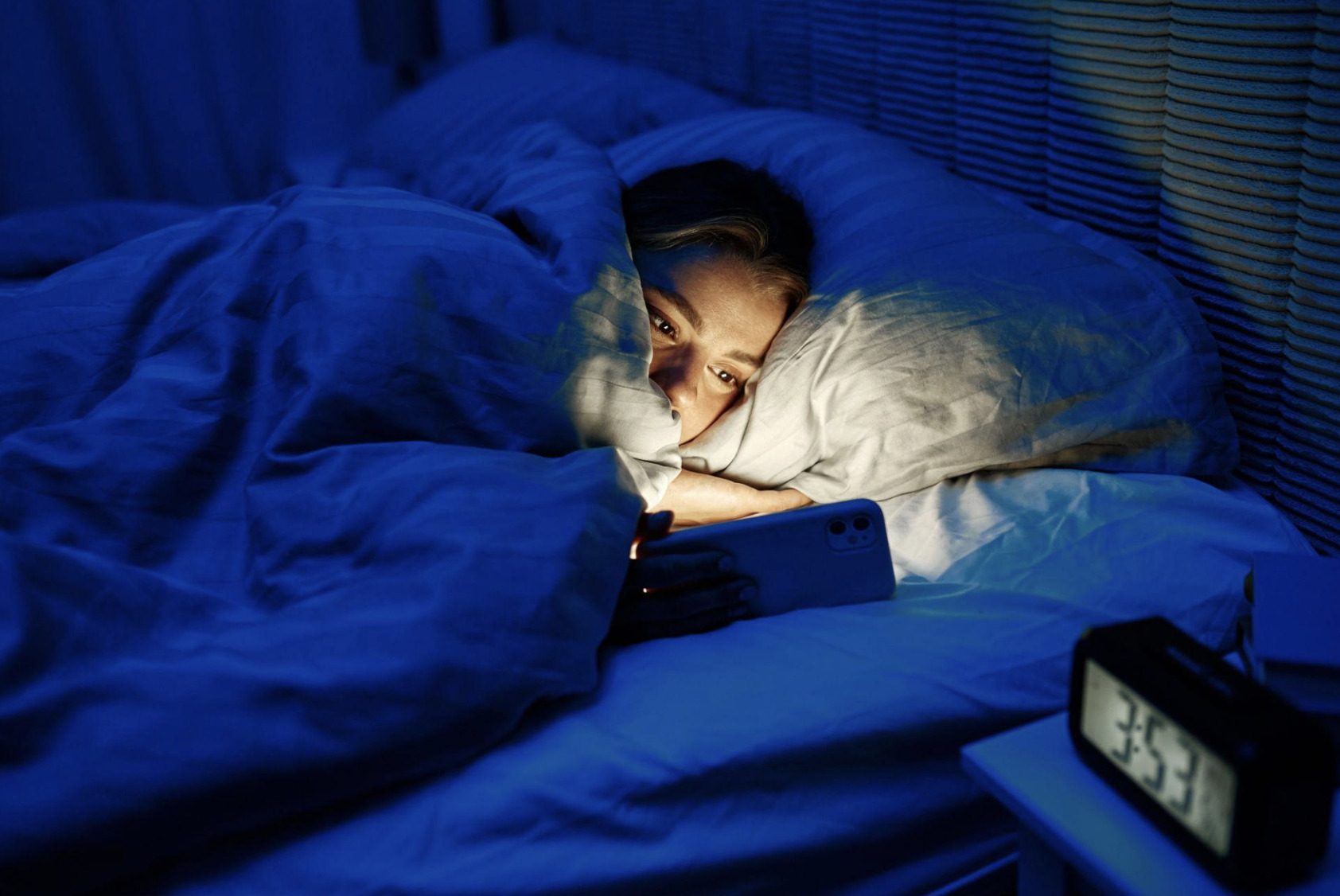
You've been scrolling for six hours. You've been switching between tabs for six hours. You've been receiving small, insistent notifications that each required a fragment of your attention, never enough to feel like a real interruption, always enough to break whatever thread you were holding. You haven't done anything. You're exhausted.
This is the quiet exhaustion of the digital present, and the reason nobody talks about it clearly is partly that it's hard to describe without sounding like you're complaining about being comfortable. You sat in a chair and looked at a screen. You weren't a coal miner. The tiredness feels like it shouldn't count, which makes it harder to identify and harder to address. We are collectively struggling with a form of fatigue produced by conditions that have no historical precedent, and we are mostly trying to manage it without even having agreed on what to call it.
Why Your Brain Is Tired When You Did Nothing
The mechanism is worth understanding because it changes what you can do about it.
Human attention is not an infinite resource. It is a finite biological capacity that depletes with use and recovers with rest. The kind of rest it requires, however, is specific: it is not necessarily sleep (though sleep matters) and it is not passivity. It is the absence of directed attention demands — the experience of time where your focus is not being pulled toward specific stimuli by external sources.
The pre-digital version of rest was largely available by default. Waiting for a bus was waiting for a bus. A lunch break was a lunch break. The stimulation available in any given moment was limited by what was physically present in that moment. There were entire stretches of the day when the environment made no particular demands on your attention, and your brain recovered without you doing anything to facilitate the recovery.
The contemporary version of rest has to be actively created, because the default environment — the phone, the notification system, the feeds designed to generate maximum engagement — is always making demands. If you do not actively choose rest, the environment will fill the space with stimulation. And stimulation, even stimulation that feels passive (watching a video, scrolling a feed), is not rest in the attentional sense. You are being pulled, constantly, toward the next thing.
This is the structural problem. It's not that any single thing you do online is harmful. It's that the aggregate — the total volume of small attentional demands across a day — produces a cumulative depletion that your brain experiences as exhaustion even when your body has done nothing physically demanding.
The Notification Architecture Problem
The notification system of the modern smartphone was designed with good intentions and catastrophic consequences.
The original design logic was convenience: instead of checking multiple apps for updates, the app would come to you. You would see what you needed to see at the right moment and not miss anything important. This is a real benefit. If someone texts you that they're running late, knowing immediately is better than knowing an hour later.
The problem is that the system was not designed to be selective about what it treats as important. A text from a friend running late is genuinely important. A notification that someone you follow on a platform you check twice a week has posted something is not. But the system handles both identically — the same interruption, the same small demand on your attention, the same fraction of your daily cognitive budget consumed before you even consciously process what you're looking at.
Studies measuring smartphone interactions consistently find that users receive between 50 and 80 notifications per day, depending on their app configurations. Each notification produces a small cortisol spike — a physiological stress response that is adaptive for genuine emergencies and mildly harmful when repeated dozens of times across a working day. The aggregate cortisol load of a typical notification-enabled day is measurably higher than the same person's load would be without it.
The issue is not that any single notification creates harm. The issue is the architecture: a system optimised to deliver everything with equal urgency teaches your nervous system that everything is equally urgent, which is a form of chronic stress even when nothing is actually wrong.

Why Rest Doesn't Feel Like Rest Anymore
There is a widespread experience that many people struggle to articulate: taking time off and coming back more tired than you started.
The vacation that leaves you depleted. The weekend that passes without you feeling rested. The evening of "doing nothing" that doesn't produce the recovery you needed. This experience has become common enough that it's started generating its own content — the think pieces about why rest doesn't work anymore, the wellness industry's response with a new category of products designed to solve the rest problem — without anyone quite landing on a diagnosis.
The diagnosis, I think, is this: rest without attentional space is not restorative rest. If you spend your vacation scrolling the same feeds you scroll at work, reading the same news, maintaining the same pattern of small attentional interruptions, you have changed your location but not your cognitive conditions. Your brain is in the same state it was at the office, only in a hotel room.
The environments most consistently associated with genuine cognitive restoration — natural settings, quiet spaces, physical activity without devices, conversations with people you feel safe with — share a property that is not immediately obvious. They are environments where your attention can move freely according to your own internal cues rather than being pulled by external stimuli designed to capture it. A walk in a park restores attention not because parks are magical but because parks don't have algorithms. Your gaze moves to what you find interesting, at the pace you set, without anyone having optimised the park for maximum engagement.
This sounds obvious when stated directly. But it implies something that the contemporary wellness industry tends to avoid stating clearly: the most effective forms of rest involve removing yourself from the attention economy, not finding better products within it. The sleep tracking app, the meditation app, the productivity app — all of these are more stimulation arriving through the same channel. They may produce genuine benefits. They are not the same as the absence they are trying to approximate.
The Social Pressure That Makes This Hard to Talk About
Part of why the quiet exhaustion of digital life is hard to discuss is that discussing it involves a form of social risk.
Saying you find the constant connectivity exhausting can sound like ingratitude — like complaining about having running water. The phone in your pocket is genuinely miraculous. The access to information, to people, to entertainment, to services that it provides is a real improvement over what came before. Criticising the conditions produced by ubiquitous connectivity can feel like ingratitude for the convenience, or like nostalgia for a past that had its own serious problems.
It can also sound like a privilege complaint. Not everyone has the option to unplug. People whose jobs require constant availability, people who depend on social platforms for their income, people who live in conditions where the phone is the primary connection to the outside world — for all of these people, the suggestion to "step back from your devices" is either impractical or insulting.
These are real objections, and they're why the conversation about digital exhaustion often gets stuck in a frustrating loop: the people with the most resources to change their relationship with technology don't necessarily feel the problem most acutely, and the people who feel the problem most acutely often have the least freedom to address it structurally.
But the objections don't dissolve the problem. They just mean the conversation needs to be more careful about what it's saying. The exhaustion is real. It is more acute for people who have less choice about their digital conditions. And the solutions that are available are different for different people — which means the conversation is more useful when it talks about specific changes rather than general lifestyle orientations.
What Actually Helps (Based on What We Know)
I am resistant to listicles, and this is not going to become one. But there are a few things that the research and common experience converge on, and they're worth naming specifically.
Batch your notifications. The attentional damage of notifications comes primarily from their interrupting quality — the intrusion into whatever you're doing — rather than from the information they contain. Most notifications can wait fifteen or thirty minutes without any real cost. Turning off real-time delivery for everything except genuine emergencies (calls, texts from specific people) and checking in batches dramatically reduces the cortisol architecture of the day without losing access to the information.
Protect a daily window without screens. The specific length is less important than the consistency. Even forty minutes — a walk, a meal without a phone on the table, a physical task that doesn't require a device — provides attentional recovery that counteracts the depletion pattern. The research on Attention Restoration Theory suggests that this works best when the time involves natural environments or quiet physical activity, but any period of voluntary, undirected attention is better than none.
Notice the difference between stimulation and rest. This is the hardest one because it requires developing a sensory vocabulary for a distinction that isn't immediately obvious. The next time you spend an evening "doing nothing," pay attention to whether you feel restored or depleted afterward. If you feel depleted, you were probably in stimulation mode disguised as rest mode. The distinction will become clearer over time, and once you can feel it, you can make better choices about which you need.
Talk about it without making it a moral issue. The reason the quiet exhaustion of digital life is hard to address collectively is that we've mostly been treating it as a personal failing — you're not resilient enough, you don't have enough willpower, you need to be more disciplined about your screen time. It's not a personal failing. It's a structural condition produced by systems designed to capture attention. Treating it as a shared condition rather than an individual weakness makes it easier to address and easier to be honest about.
The Thing About Naming Things
There is a form of relief that comes from having a name for something that has been confusing you.
Not because naming it makes it easier to fix — most things that are hard to fix stay hard to fix after you name them. But because a name changes the relationship. It moves the thing from the category of vague ambient discomfort into the category of identifiable problem. And identifiable problems, at least in principle, have the possibility of being addressed.
The quiet exhaustion of contemporary digital life deserves a better name than it currently has. Digital fatigue is close but doesn't quite capture it — it sounds too much like eye strain. Attentional depletion is more accurate but clinical. Notification-driven cortisol accumulation is precise but unusable in conversation.
For now, I'll call it what it feels like: the specific tiredness of having been available all day. The depletion that comes from having been findable, reachable, responsive, engaged with the feed and the inbox and the notification stack from the moment you woke up until the moment you stop. The exhaustion not of having done something hard, but of having been always about to do something — always potentially interrupted, always potentially needed, always one notification away from having to redirect your attention again.
That specific tiredness is real. It deserves to be taken seriously. And the first step is simply to recognise it for what it is — not a personal weakness, not an overreaction, but the entirely predictable consequence of spending your attention as currency in a system that never closes.