Why Everyone Suddenly Wants Tailoring Again — and What That Says About a Culture Tired of Comfort
If you have walked past a shop window in any major city in the past six months, you have probably noticed a small but very specific change. The mannequins are w...

Community Author · May 28, 2026
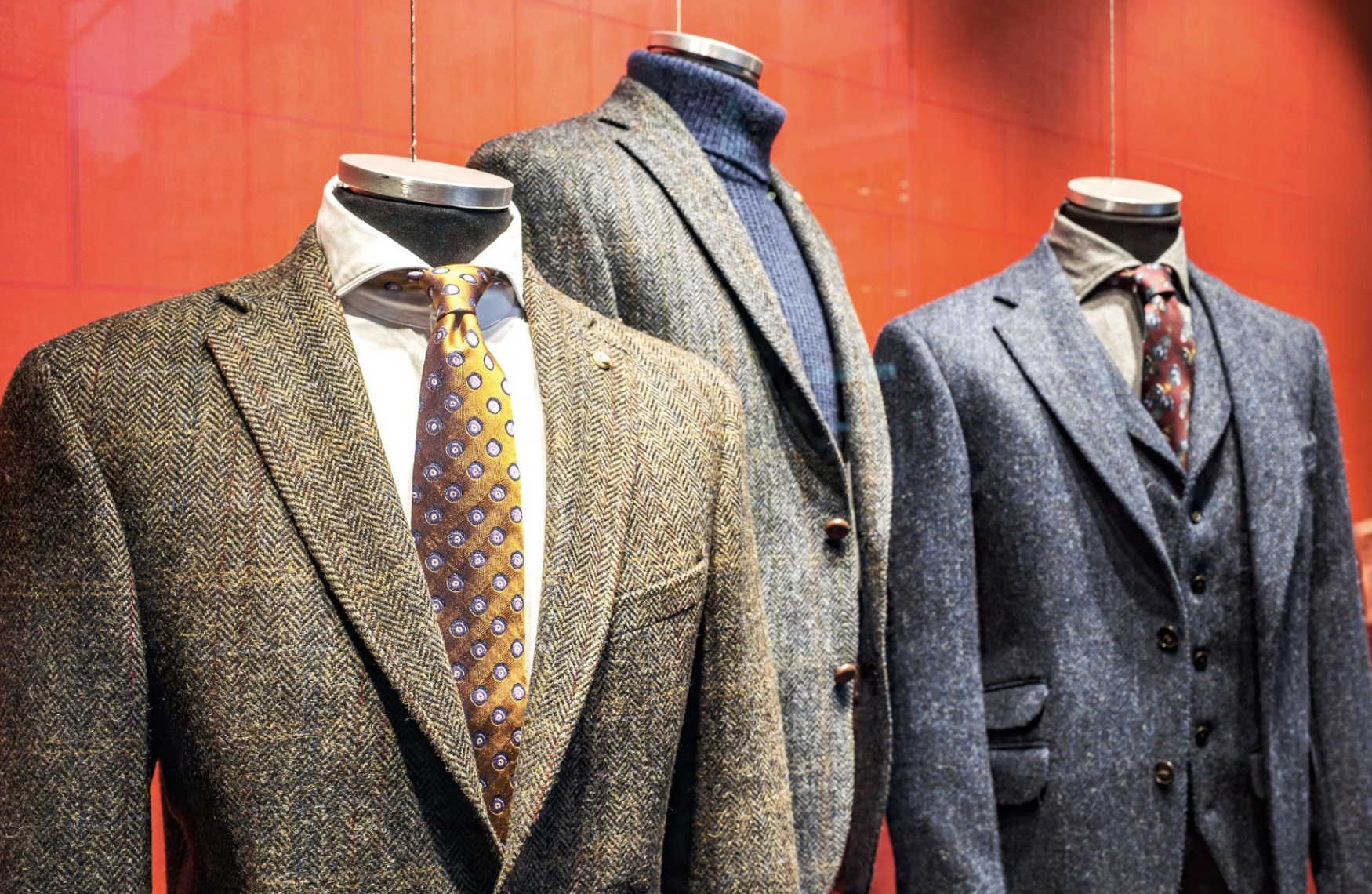
If you have walked past a shop window in any major city in the past six months, you have probably noticed a small but very specific change. The mannequins are wearing jackets again. Not soft, draped, deconstructed jackets of the kind that ruled the back half of the 2010s, but jackets with shoulders, structure, lapels that mean something — jackets that hold a shape independent of the body inside them. Beside them, often, are trousers that finish at the shoe rather than puddle at it, and shirts with collars sharp enough to read as a deliberate choice rather than a tolerated necessity.
Tailoring is back. The exact moment it became back is hard to pinpoint, which is usually the way these shifts work. But the cumulative evidence is now undeniable: the shop windows, the menswear feeds, the women's collections that have spent two years quietly reintroducing the suit, the brands that built their reputations on athleisure and have started releasing tailored capsules with the kind of attention they used to reserve for hoodies. Something that had been outside the room for a decade has walked back in.
The interesting question is not whether tailoring is returning. It is what its return is saying about a culture that, for over ten years, was almost monastically devoted to its opposite.
How comfort became the dominant idea
To understand the return, it helps to remember the long ascent of the thing it is returning from. The dominant fashion idea of the 2010s, slowly at first and then very fast, was softness. Athleisure crossed from gym to street; jersey replaced wool; the hoodie was admitted into spaces it had previously been ejected from; the white sneaker became the default footwear for nearly every adult occasion. The pandemic accelerated the trajectory by an order of magnitude. For roughly eighteen months, an enormous fraction of the global workforce had no professional reason to wear anything that was not stretchable, and after the lockdowns ended, a meaningful share of that workforce simply did not put the old clothes back on.
The fashion industry adjusted with the speed of a market that had no choice. Luxury houses produced their own elevated versions of sweatpants. Premium denim ceded ground to elasticated waistbands. Tailoring did not disappear — it never quite does — but it was widely treated, even by the houses that built their identities on it, as a niche occasion garment rather than a default register. The dominant register was unfinished. Soft, comfortable, easy, unfussy. For a long while, that was simply what clothing was.
What tailoring actually does to a body and a room
Tailoring is, at its core, an argument about form. A well-cut jacket does not drape over the body; it finishes the body. The shoulder line is decided by the maker, not by the wearer's posture. The waist is shaped by the cut, not by the way the fabric falls when gravity takes over. The whole garment exerts a quiet structural opinion about where the body should be — and, by extension, about how the person in it should occupy the space they are standing in.
This is the part of tailoring that softness-era fashion either could not or did not want to do. A drapey, deconstructed garment is forgiving in the most literal sense; it accommodates the body it is on without insisting on a relationship with it. A tailored garment, by contrast, makes a claim. It says, with whatever degree of confidence, that the person inside it has shape, and is willing to be seen as having shape, and is here for a reason that is not strictly comfort. That is a small thing on a single jacket. Distributed across a culture, it is not a small thing at all.
Why this is happening now
The temptation is to call the return of tailoring a backlash, but that under-describes what is happening. Backlashes are reactive; they are about no. What is happening with tailoring in 2026 is less a no than a quiet, accumulating yes to something the previous decade had been gently refusing to talk about.
Three things are converging at once.
The first is the return of the office. Not the full return — that is not coming back — but the partial, hybrid, three-days-a-week return that has become the actual structure of professional life in most cities. For the workforce that is now physically present at desks again, the question of what to wear became real in a way it had stopped being. The first instinct was to extend the soft register into the office; the second, more reflective instinct has been to reach for clothes that do some of the work of looking like an adult, so the wearer does not have to spend the morning constructing that impression from scratch.
The second is generational. The young consumers driving fashion culture on social platforms have, in many cases, no memory of tailoring as the default register. They encountered structured clothing the way previous generations encountered vinyl records — as something with the appeal of the unfamiliar, the un-mass, the thing their parents had moved away from. For a generation that grew up in soft clothes, the structured jacket is not nostalgia. It is novelty.
The third is broader, and harder to name without sounding more solemn than the subject deserves. There is a particular kind of cultural exhaustion that sets in after a long period in which a single idea has been allowed to define everything. Softness, in the 2010s and early 2020s, did not merely shape clothes; it became something close to a moral category — the comfortable, the easygoing, the unbothered, the un-uptight. For a while that was refreshing. After more than a decade of it, a portion of the culture started to register what it had been quietly trading away. Some of that trade involved precision. Some of it involved formality, in the older sense of the word — form as a way of taking the moment seriously. Tailoring is, among other things, a vocabulary for taking the moment seriously, and a culture that had finished mocking that vocabulary for being uptight is, slowly, remembering what it was for.
The risk inside the return
It is worth being honest about the danger of this turn, because every fashion movement contains the seeds of its own worst version. The tailoring renaissance can curdle, easily, into nostalgia for an older social order in which the suit was a uniform of exclusion as much as it was a vocabulary of seriousness. A culture that returns to structure can also return to the rigidities that structure used to enforce — the gendered cuts, the gatekept tailoring traditions, the assumption that to look serious one had to look a particular kind of expensive.
The better version of the return, and the one most of the current movement is actually pursuing, is the one that takes from tailoring its structural intelligence — the lapel, the shoulder, the trouser that finishes — without re-importing the old hierarchy of who is allowed to wear it well. Women's tailoring, in the current wave, is doing some of the most interesting work in fashion. The second-hand market for tailored pieces has, by every measurable indicator, exploded — vintage Yves Saint Laurent jackets, mid-century suiting, mid-priced tailored brands on resale platforms — which means access to the form is increasingly available without the original price barrier. The democratisation is not complete and the gatekeeping has not vanished, but the direction is genuinely different from the last suiting revival, and that matters.
What the return is actually saying
Strip away the trend coverage and the runway analyses, and what the return of tailoring is saying about the moment is, at root, fairly simple. A culture that has spent more than a decade prioritising ease, and has produced — in many of the same years — record levels of distraction, exhaustion, and a quiet sense that the days run through one's hands without producing the kind of week one used to be able to point at, is, slowly, beginning to ask whether the trade was worth it.
Clothing is one of the small places that question is being answered. The choice to put on something with a shoulder and a structure and a finish, instead of something with a hood and an elastic waistband, is not a particularly heavy choice. But it is one of the dozens of small choices a person makes in a morning that, taken together, signal to themselves the kind of day they are intending to have. For a decade, the small signal was: today is for being comfortable. For an increasing number of people, the small signal is becoming something else. Today is for being formed. Today is for taking a shape. Today is for showing up to the day as a thing the day cannot drape over and ignore.
The clothes are catching up with that shift. The shop windows know. The mannequins are wearing jackets again, and the jackets, for the first time in a long while, are insisting on something.