

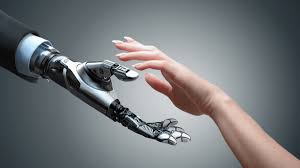
When Humans Start Thinking Like Machines
The relationship between humans and technology has always been defined by influence, but rarely has that influence felt so quietly transformative. For centuries...
Community Author · April 23, 2026
The relationship between humans and technology has always been defined by influence, but rarely has that influence felt so quietly transformative. For centuries, people have learned by observing, imitating, and adapting the behavior of others. Parents, teachers, public figures, and peers have shaped how individuals think, act, and express themselves. Imitation has never been a weakness—it has been the foundation of learning, identity, and cultural continuity.
But something subtle has shifted.
Today, for the first time, imitation is no longer flowing in just one direction.
Artificial intelligence, built on vast datasets of human behavior, language, and decision-making patterns, was designed to reflect us. It analyzes, predicts, and reproduces structures based on what humans have already created. It does not understand, feel, or intend. It calculates. And yet, paradoxically, as these systems become more integrated into everyday life, people are beginning to mirror the very patterns that machines use.
This is not a theoretical concern. It is already happening.
The Nature of Human Imitation
To understand this shift, it is important to recognize how imitation traditionally works. Humans never copy entirely. Instead, they select fragments—traits, habits, ways of thinking—and integrate them into their own identity. This process is inherently creative. It transforms influence into something new.
A child learns language not by replicating every word exactly, but by adapting structures into personal expression. An artist studies others not to duplicate, but to evolve. Even in professional environments, imitation serves as a starting point for innovation.
This form of imitation strengthens individuality rather than diminishing it.
But imitation becomes something entirely different when it loses this adaptive layer.
The Rise of Machine-Like Thinking
Artificial intelligence operates on clarity, structure, and efficiency. It delivers responses that are clean, organized, and often stripped of emotional complexity. These qualities, while useful, introduce a new kind of cognitive standard—one that prioritizes immediate answers over exploratory thinking.
As people interact more frequently with AI systems, subtle behavioral shifts emerge:
Language becomes more neutral and structured
Emotional nuance is reduced in favor of clarity
Questions are replaced by the search for definitive answers
Decision-making leans toward pre-formed solutions
What begins as convenience gradually becomes habit.
Instead of engaging in messy, nonlinear thinking, individuals begin to favor outputs that resemble machine logic. The result is not improved intelligence, but compressed thinking—faster, more efficient, yet often shallower.
The Comfort of Ready-Made Answers
One of the most powerful drivers of this transformation is convenience.
Artificial intelligence eliminates friction. It removes the need to search, compare, question, and struggle. In doing so, it creates a seamless experience where knowledge feels instantly accessible and complete.
But ease comes with a cost.
When answers are always available, the motivation to question them weakens. When solutions are presented fully formed, the process of building understanding becomes optional. Over time, this leads to a subtle but critical shift: trust moves away from personal judgment and toward external systems.
The danger is not dependency in a dramatic sense. It is something far quieter—the gradual outsourcing of thought.
The Shift of Authority
At the core of this transformation lies a deeper issue: authority.
Traditionally, knowledge required effort. It demanded interpretation, skepticism, and verification. The individual remained an active participant in the thinking process. Even when influenced by others, there was always a layer of internal evaluation.
With AI, that layer risks disappearing.
When responses “sound correct,” they are often accepted without further analysis. The authority of the system becomes implicit. Not because it is always right, but because it is consistently convincing.
This creates a new dynamic where technology is no longer just a tool—it becomes a reference point.
And once that shift occurs, the role of the human mind begins to change.
Three Consequences of Passive Imitation
If this pattern continues without awareness, it can lead to three significant outcomes.
1. Weakening of critical thinking
When individuals rely on pre-structured answers, they engage less in analysis. Over time, this reduces the ability to evaluate complexity, detect nuance, and challenge assumptions.
2. Loss of authentic expression
Structured, neutral language may improve clarity, but it often removes individuality. Expression becomes standardized, predictable, and less reflective of personal experience.
3. Increased cognitive dependency
As systems handle more thinking processes, the human role shifts from creator to consumer. Knowledge is no longer built—it is accessed.
None of these changes happen suddenly. They develop gradually, reinforced by daily habits and interactions.
The Paradox of Improvement
It would be simplistic to frame this entirely as a negative evolution.
Artificial intelligence introduces valuable cognitive tools. It promotes clarity, organization, and efficiency—qualities that can enhance human thinking when used consciously. Structured reasoning, when combined with creativity, can lead to stronger decision-making and more precise communication.
The problem is not imitation itself.
The problem is unconscious imitation.
When people adopt machine-like thinking intentionally—using structure without losing depth—it becomes an advantage. But when the process happens passively, without reflection, it narrows the scope of human cognition.
The Role of Awareness
The relationship between humans and AI is not symmetrical.
Machines operate within predefined systems. Humans, on the other hand, possess judgment, values, and the ability to question. This difference is fundamental.
The challenge is to preserve it.
Conscious use of technology means maintaining an active role in thinking:
Questioning answers instead of accepting them immediately
Using structure as a tool, not a limitation
Allowing space for uncertainty and exploration
Recognizing when convenience replaces understanding
Awareness transforms interaction from passive consumption into active engagement.
Thinking as a Process
Perhaps the most important realization is this: thinking is not about answers.
It is about the process that leads to them.
In a world where answers are abundant, the ability to ask meaningful questions becomes more valuable than ever. Doubt, curiosity, and exploration—these are not inefficiencies. They are essential components of human intelligence.
When individuals abandon this process, they do not become more advanced. They become more predictable.
And predictability, while efficient, is the opposite of creativity.
The Real Question
The influence of artificial intelligence is no longer a future concern. It is already embedded in daily life. The real question is not whether it will shape human thinking—it already does.
The question is how.
Will individuals remain active creators of their own thought processes, using technology as support? Or will they become passive adopters of pre-formed patterns, allowing external systems to define how they think?
Imitation has always driven human evolution. But today, it demands a new level of awareness.
Because this time, the model we risk copying does not think.
And if we are not careful, we may slowly begin to do the same.