
The Quiet Rise of Cozy Games: Why Millions Are Choosing Calm Over Competition
For most of gaming's history, the dominant verbs were aggressive ones: shoot, race, fight, conquer, win. The biggest titles were defined by competition, mastery...

Community Author · June 9, 2026
For most of gaming's history, the dominant verbs were aggressive ones: shoot, race, fight, conquer, win. The biggest titles were defined by competition, mastery, and the adrenaline of high stakes. So it is genuinely surprising that one of the most significant shifts in online entertainment over the past decade has gone almost entirely the other way — toward games where nothing chases you, nothing kills you, and there is, often, no way to lose at all. The "cozy game" has grown from a quiet niche into a cultural force, and its rise says something revealing about how a stressed, over-stimulated audience actually wants to spend its leisure time.
What makes a game "cozy"
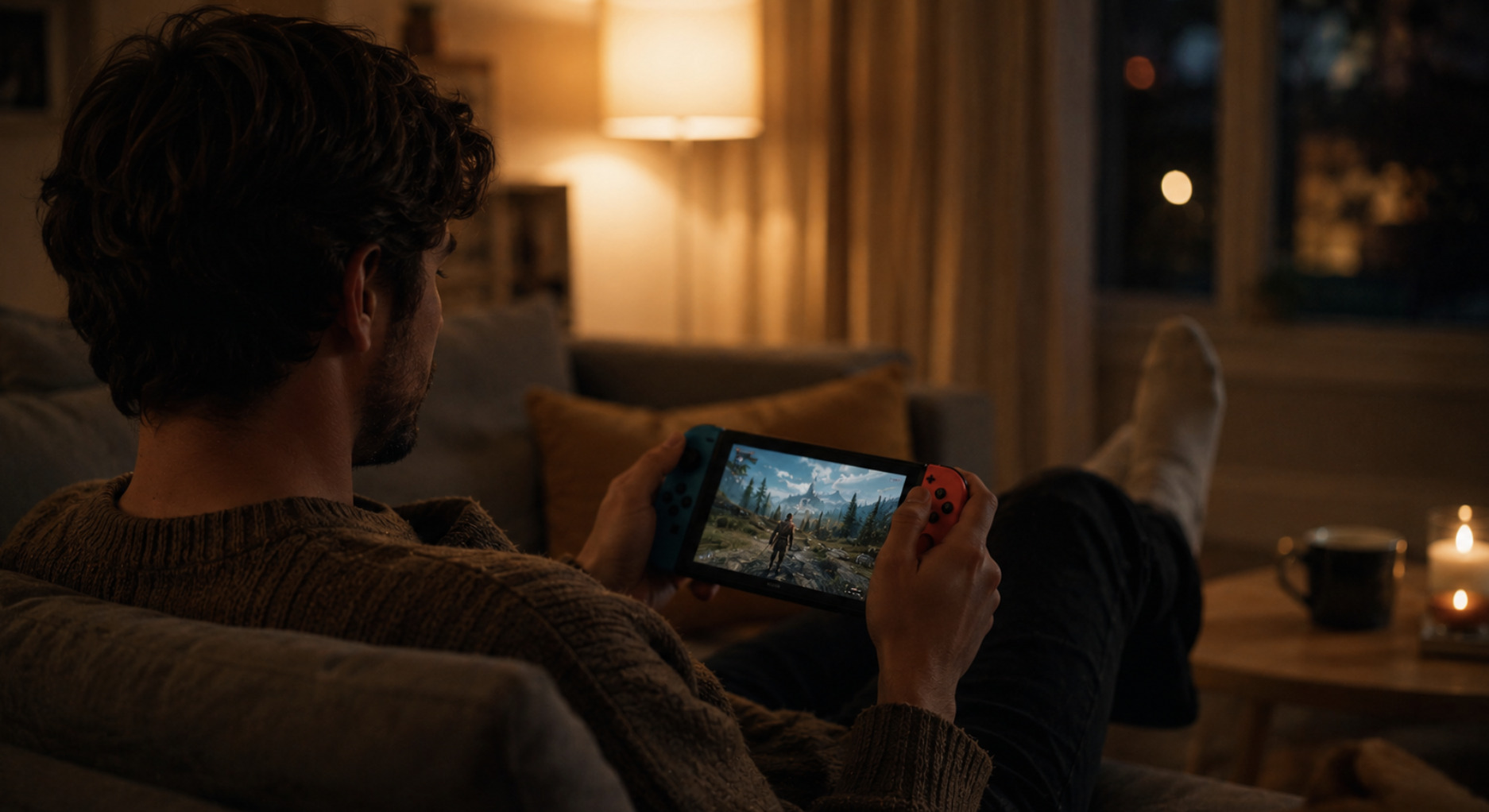
There is no official rulebook, but the genre has a recognizable spirit. Cozy games are low-stakes and gentle. They tend to remove or soften the things that make traditional games stressful: there are usually no fail states, no punishing timers, no enemies hunting you, no leaderboard reminding you that you are losing. In their place is a different set of pleasures — tending, building, arranging, collecting, decorating, befriending. You water crops, organize a home, restore a garden, run a little shop, chat with charming neighbors. Progress is steady and forgiving rather than sudden and merciless.
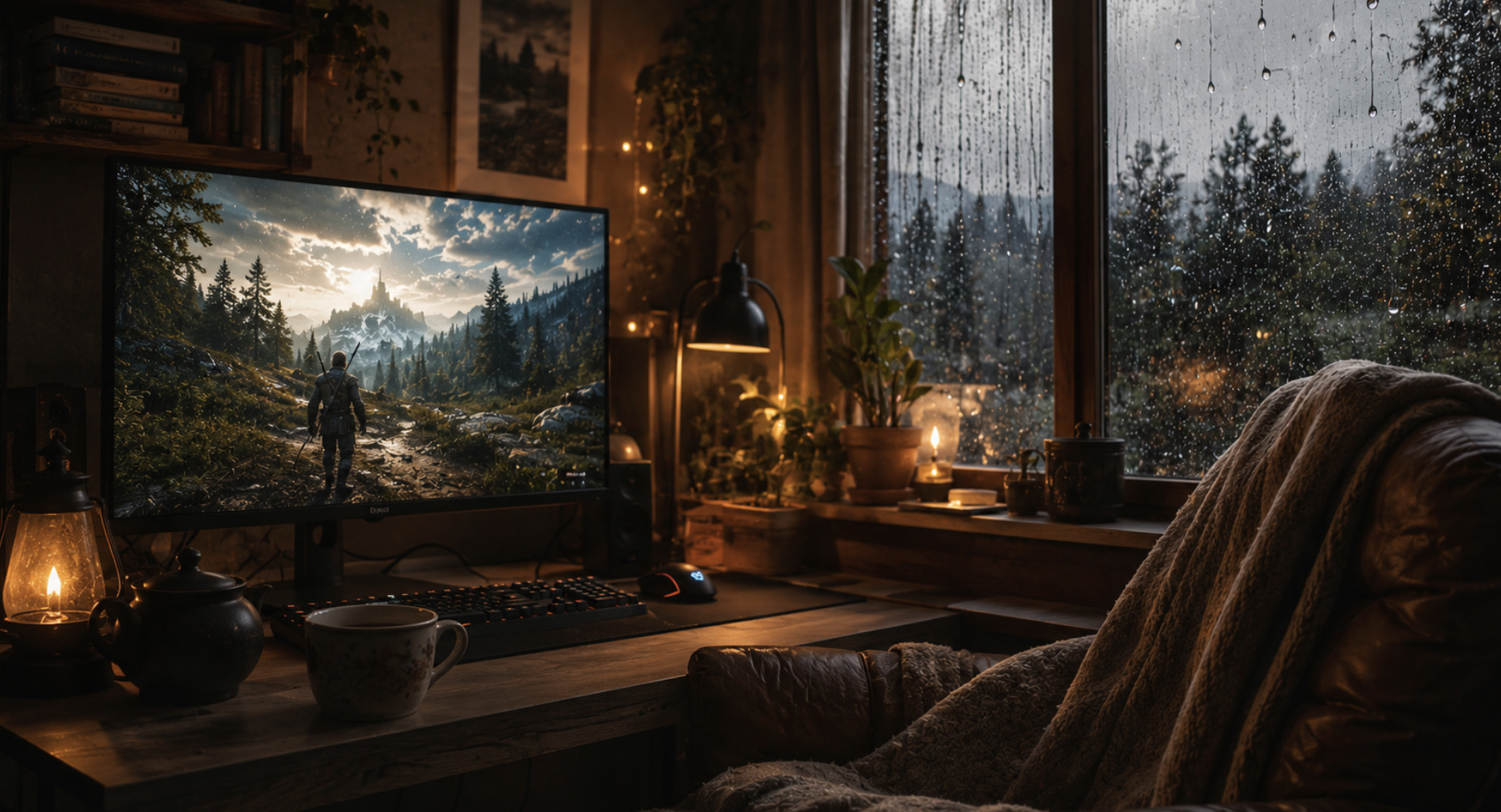
The aesthetic matches the mechanics. Soft palettes, warm music, rounded shapes, and a general atmosphere of safety. Where a competitive game is engineered to spike your heart rate, a cozy game is engineered to lower it. The fantasy on offer is not power or triumph but comfort: a small, manageable world that responds to your care and asks nothing harsh of you in return.
From niche to phenomenon
The genre had quiet ancestors for years, but two titles turned it into a movement. The first was Stardew Valley, the farming-life game built almost single-handedly by a solo developer and released in 2016. It invited players to abandon a soulless office job for a rundown farm and rebuild a life through planting, fishing, and forming friendships in a gentle rural town. It became a word-of-mouth sensation, selling many millions of copies and proving that an enormous audience was hungry for warmth rather than warfare.
The second, and the one that pushed cozy gaming fully into the mainstream, was Animal Crossing: New Horizons, released in early 2020 at the precise moment the world locked down. As people were confined to their homes, a game about building a peaceful island life, visiting friends' islands, and decorating to your heart's content became a global comfort blanket. It was not just played; it was a place to socialize when socializing had vanished, and it sold in the tens of millions. Its timing was accidental, but its appeal was not. It answered an emotional need the moment that need became universal.
In their wake came a flourishing of the genre. Smaller, deeply human games like Unpacking — which tells an entire life story simply through the objects a person unpacks across years of moving home — and Spiritfarer, a gentle game about ferrying spirits to the afterlife, won critical acclaim and devoted audiences. The phrase "cozy games" became a search term, a community, and a curated category in storefronts. What had been a tendency became a genre with a name.
Why calm became compelling
The deeper question is why this happened now, and the answer points outward, at the world the players live in. We have built a digital environment, examined elsewhere on this site, that is largely optimized to capture attention through stress: feeds engineered around uncertainty, notifications designed to interrupt, entertainment built to keep us in a state of perpetual anticipation. Against that backdrop, a game that simply lets you be — that does not demand, ping, punish, or pressure — feels almost radical. Cozy games are, in part, a reaction against the exhausting design of everything else.
There is also a real wellness dimension, which is why the genre sits so comfortably between gaming and lifestyle. Players consistently describe these games in the language of self-care: as a way to decompress after work, to manage anxiety, to fall asleep, to feel a sense of accomplishment without the cortisol of competition. The repetitive, tactile rhythms of watering a garden or organizing a room are quietly meditative. In a culture increasingly fluent in the vocabulary of burnout and mental health, a form of play that actively soothes rather than stimulates has obvious appeal.
Crucially, cozy games also widened the audience for the medium. Their gentleness made gaming legible and welcoming to people who never saw themselves as "gamers" — those put off by twitch reflexes, steep difficulty, or hostile online communities. By lowering the barrier and the blood pressure at once, the genre brought in players of every age and background, and that broadened audience has in turn fueled the genre's growth in a self-reinforcing loop.
What the trend tells us
It would be easy to dismiss cozy games as escapism, and in a sense they are — but escapism toward something, not just away. They reveal a population that does not always want its entertainment to be a contest or a cliffhanger. Sometimes people want the opposite: a low-stakes world that rewards care, offers gentle progress, and lets them set the pace. After years of entertainment engineered to keep us leaning anxiously forward, the runaway success of games built on calm is a quiet correction, a vote cast with millions of hours of play for a different kind of pleasure.
The genre shows no sign of fading. New cozy titles arrive constantly, established franchises lean into the comfort angle, and the audience keeps growing as more people discover that a game can be a place to rest rather than a place to perform. In an online-entertainment landscape obsessed with intensity, the most interesting story may be the one unfolding on a small pixel-art farm, where nothing is chasing you and the only goal is to make a little corner of a world feel like home. It turns out that, given the choice, a great many of us would rather tend a garden than win a war — and the games industry, for once, has been listening.