Provably Fair, Explained. The Cryptography Behind Crypto Casinos — and What It Doesn't Guarantee
Walk into any crypto casino and the same two words greet you on the homepage: provably fair. It is the industry's central trust claim, the thing meant to set a ...

Community Author · June 19, 2026
Walk into any crypto casino and the same two words greet you on the homepage: provably fair. It is the industry's central trust claim, the thing meant to set a Bitcoin dice site apart from the offshore operators of the past. The pitch is seductive — you don't have to trust us, the maths proves we can't cheat you. That claim is partly true and widely misunderstood, and the gap between what provably fair actually proves and what players assume it proves is where a lot of money goes to disappear. This is what the mechanism really does, and the much longer list of things it does not.
The problem it is trying to solve
To see why provably fair exists, start with the trust problem in ordinary online gambling. When you spin a slot at a licensed operator, a chain of institutions stands behind the claim that the result was random: the game studio, an independent testing lab that certifies the random number generator, and a regulator that can pull the operator's licence. You are not trusting the casino directly; you are trusting the auditors and the regulator who watch it.
Crypto casinos frequently operate outside that chain. Many hold only a light-touch offshore licence or none at all, with no meaningful regulator and no mandatory third-party audit. Provably fair is the attempt to replace that missing institutional trust with cryptographic proof — to let a player verify a result mathematically instead of relying on a watchdog who may not exist.
How the commit-reveal trick works
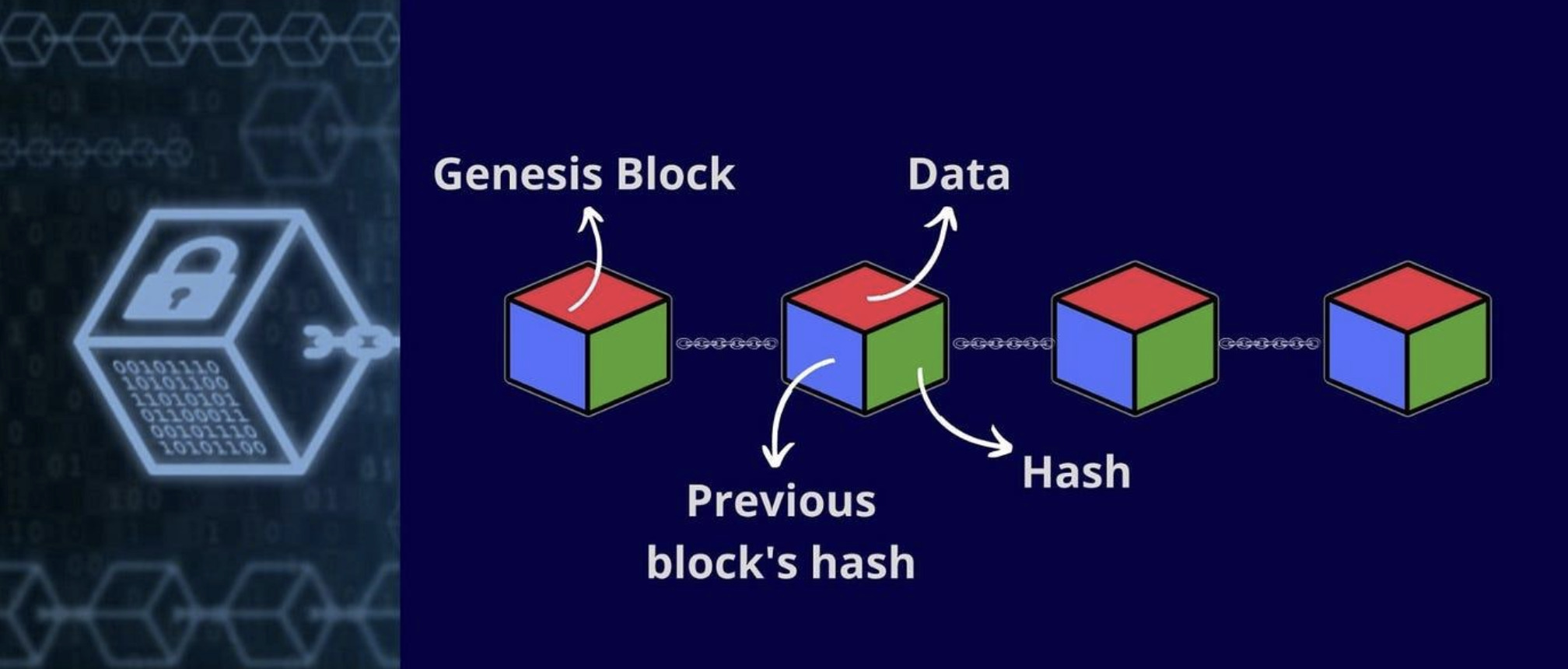
The heart of provably fair is an old cryptographic idea: commitment. The casino decides the ingredients of a result before you bet, locks them in publicly in a form you cannot read, and only later reveals them so you can check that nothing changed.
In practice there are usually three ingredients. The first is a server seed — a secret random string the casino generates. Before any betting, the casino shows you not the seed itself but a cryptographic hash of it: a fixed-length fingerprint that is easy to produce from the seed but practically impossible to reverse. That hash is the commitment. The second ingredient is a client seed, a string you provide or can change, which guarantees the casino could not have pre-computed the whole session around a seed it alone controlled. The third is a nonce, a simple counter that ticks up with each bet so that every round produces a different result from the same pair of seeds.
For each bet, the casino combines the server seed, the client seed and the nonce through a keyed hash function, and converts the output into the game outcome — a dice roll, a crash multiplier, a card. When you finish a session and the server seed is rotated, the casino reveals the original server seed. You then do two checks: you confirm that hashing the revealed seed reproduces the fingerprint you were shown at the start, and you recompute every outcome yourself from the three ingredients. If both match, you have proof that the results were fixed in advance and were not quietly rewritten after you placed your bets.
What it genuinely guarantees
Used correctly, this is a real and elegant guarantee, and it should not be dismissed. It proves that the specific outcomes you received were determined by a seed the casino had already committed to before it could see how you would bet, and that the operator did not reach in mid-session to turn a win into a loss. Within its narrow scope, provably fair does what it says: it makes after-the-fact tampering with individual results detectable.
The much longer list of what it does not prove
The trouble starts when players read that narrow guarantee as a blanket seal of trust. It is not.
Provably fair says nothing about the house edge. A dice game can be perfectly, verifiably fair in its randomness and still be built so that the maths grinds steadily in the casino's favour over time. Fairness of the draw and a losing proposition for the player are entirely compatible — and usually coexist.
It does not prove the casino is solvent or that it will pay you. The cryptography secures the game outcome; it does nothing to guarantee that a withdrawal request will be honoured, that the operator is not running on other players' deposits, or that your account won't be frozen under a vague terms-of-service clause. Plenty of verifiably fair sites have simply stopped processing withdrawals.
It is not a licence and not consumer protection. There is no regulator behind the proof, no ombudsman to appeal to, and no deposit protection if the company vanishes. The maths replaces the auditor's signature, but it cannot replace the recourse a regulator provides when something goes wrong.
It only works if you actually verify, and almost nobody does. The guarantee is worthless to a player who never runs the check, and most don't. There is also an implementation layer of trust beneath the cryptography: you are trusting that the hash shown to you is the one truly in use, that the verification tool the site provides is honest, and that the conversion from hash to outcome is implemented as described.

The crypto layer adds its own risks
Layered on top of all this are the risks that come from gambling with cryptocurrency itself rather than ordinary money. The stake is a volatile asset, which means a player faces a double exposure — the swing of the game and the swing of the coin can both move against them at once, and a "winning" session can still lose value by the time it is cashed out. Crypto transactions are typically irreversible, so a mistaken or impulsive deposit cannot be charged back. The relative pseudonymity and the often lighter identity checks that make these sites convenient also weaken the safeguards that exist elsewhere. And the same borderless design that lets the sites reach players anywhere is, in regulatory terms, an arbitrage: it routes around the consumer protections and the safer-gambling tools — deposit limits, self-exclusion, reality checks — that licensed operators in regulated markets are required to provide.
The bottom line
Provably fair is a clever and genuine piece of engineering, but it is a statement about exactly one link in a long chain: it proves an individual result was not altered after the fact. It says nothing about whether the odds are reasonable, whether the operator will pay, whether anyone is watching, or whether gambling with a volatile asset on an unregulated site is a sensible thing to do. Treating a narrow cryptographic guarantee as a broad guarantee of trustworthiness is precisely the misreading the marketing encourages — and the most expensive mistake a player can make.
A note on responsible play
This article explains a technology and its limits; it is not encouragement to gamble. Whatever the platform, the house keeps an edge and that edge favours the operator over time, and gambling with crypto can add volatility and remove the consumer protections found in regulated markets. Treat any money staked as the cost of entertainment, set limits before you start, and never chase losses. Crypto-gambling sites often lack the safer-gambling tools that licensed operators must offer, so the responsibility falls more heavily on the player. In the UK, BeGambleAware and the National Gambling Helpline offer free, confidential support; in Canada, the Responsible Gambling Council and provincial helplines can point to local resources. Gambling is restricted to those aged 18+ (19+ in most of Canada).
Frequently asked questions
What does "provably fair" actually prove? That a specific game outcome was fixed in advance, through a seed the casino committed to before it could see your bets, and was not altered afterwards. It proves the result was not tampered with — nothing more.
Does provably fair mean I can't lose, or that the odds are fair? No. A game can be provably fair in its randomness and still carry a substantial house edge. Verifiable fairness of the draw and a long-term advantage for the casino routinely coexist.
Is a provably fair casino safe and regulated? Not necessarily. The cryptography is independent of licensing. Many provably fair sites operate with little or no regulation, which means no guarantee of solvency, no assurance of payout, and no regulator to appeal to if something goes wrong.
What extra risks come from gambling with cryptocurrency? The stake is volatile, so the value of the coin and the outcome of the game can both move against you; transactions are usually irreversible; identity checks are often lighter; and the sites frequently sit outside the consumer-protection and safer-gambling frameworks of regulated markets.